-
Architecture
Interior Design
Programming
Signage Design
Site Planning
Wayfinding/Signage -
Low Maintenance Materials
-
Completed March 2014
-
Memphis, Tennessee
Central Animal Hospital
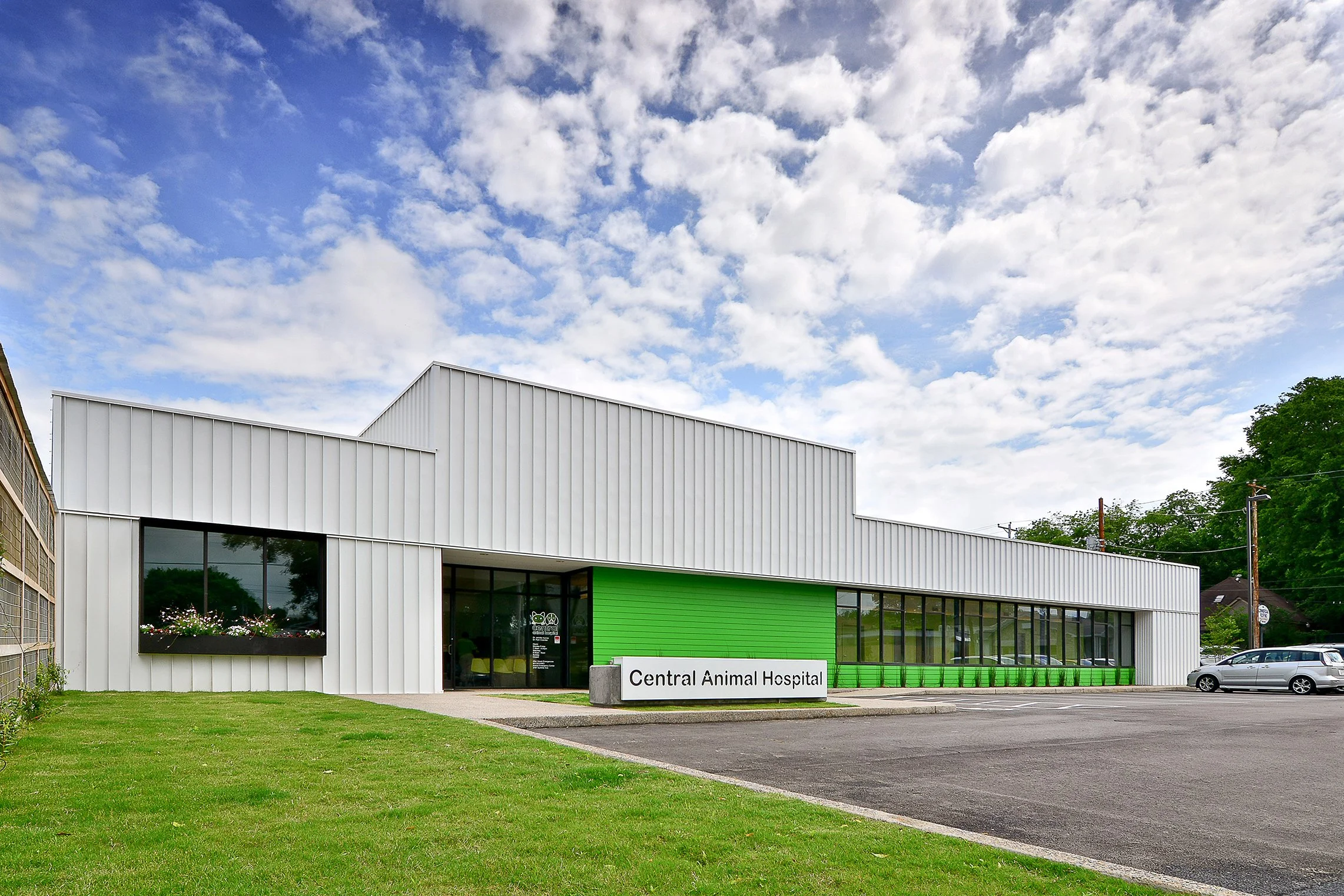
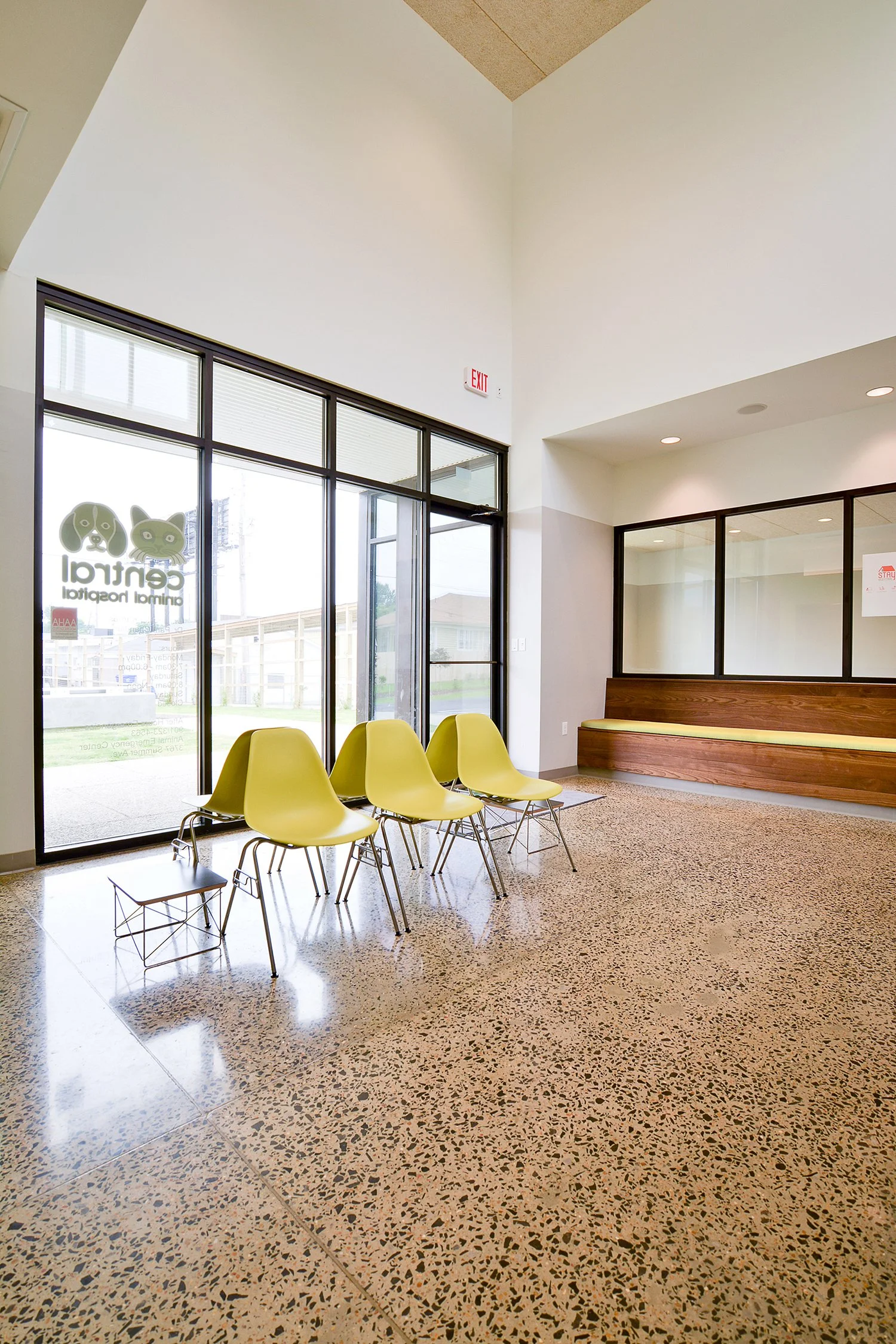
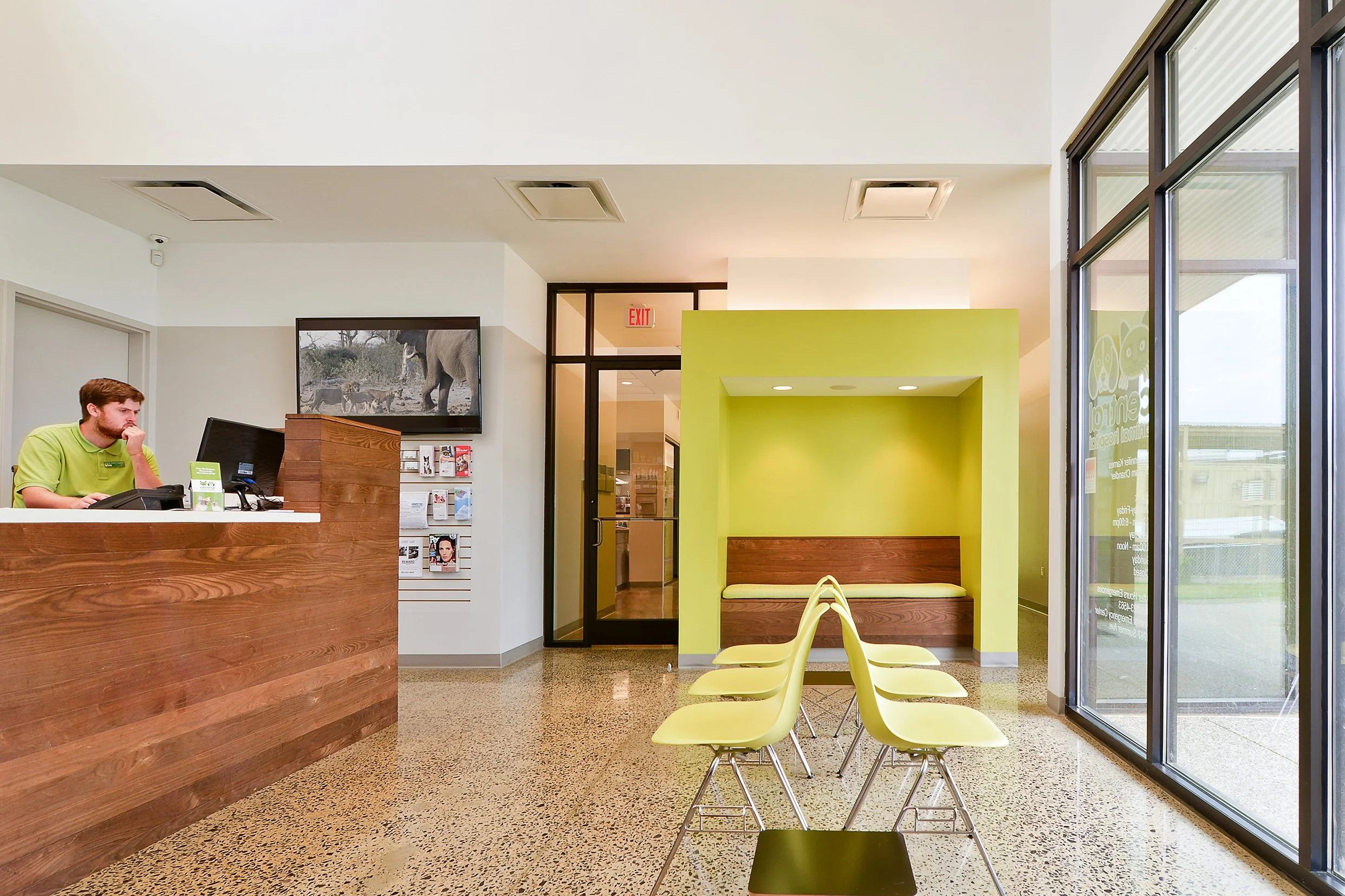
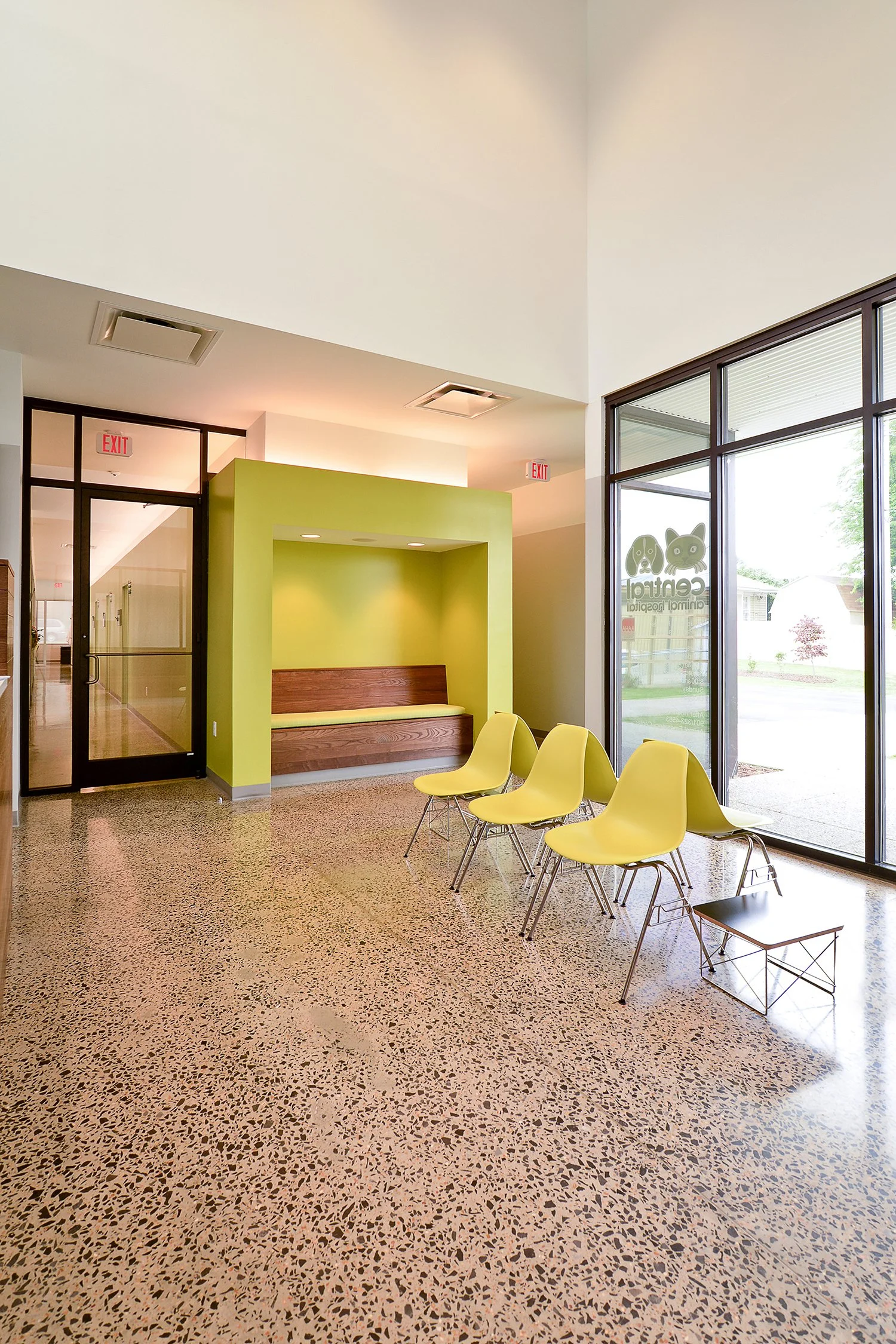
Designing a new animal hospital for an established practice with light-filled, open spaces to provide patients and families with a warmer, friendlier environment, equipped with modern treatment facilities.
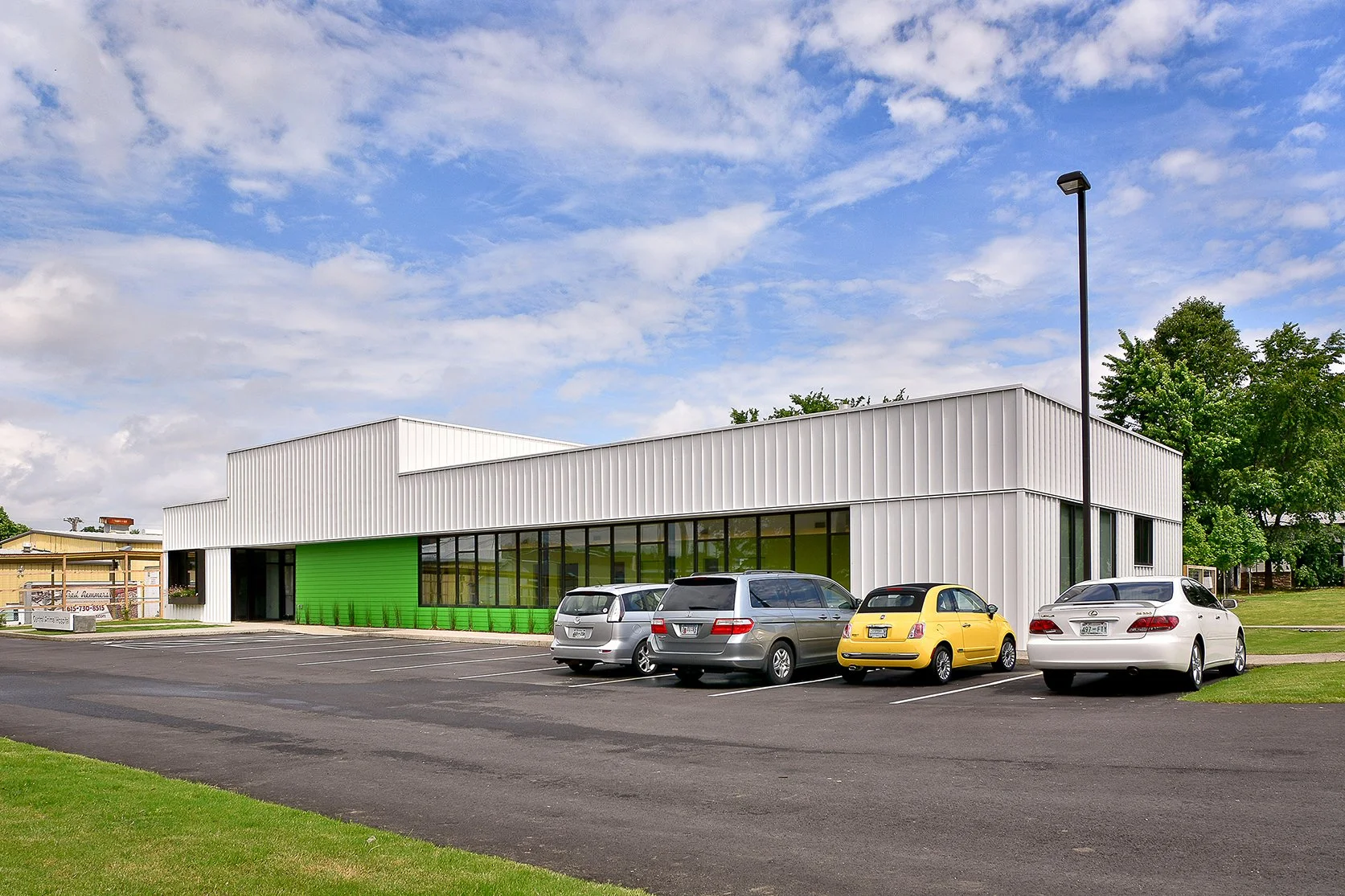
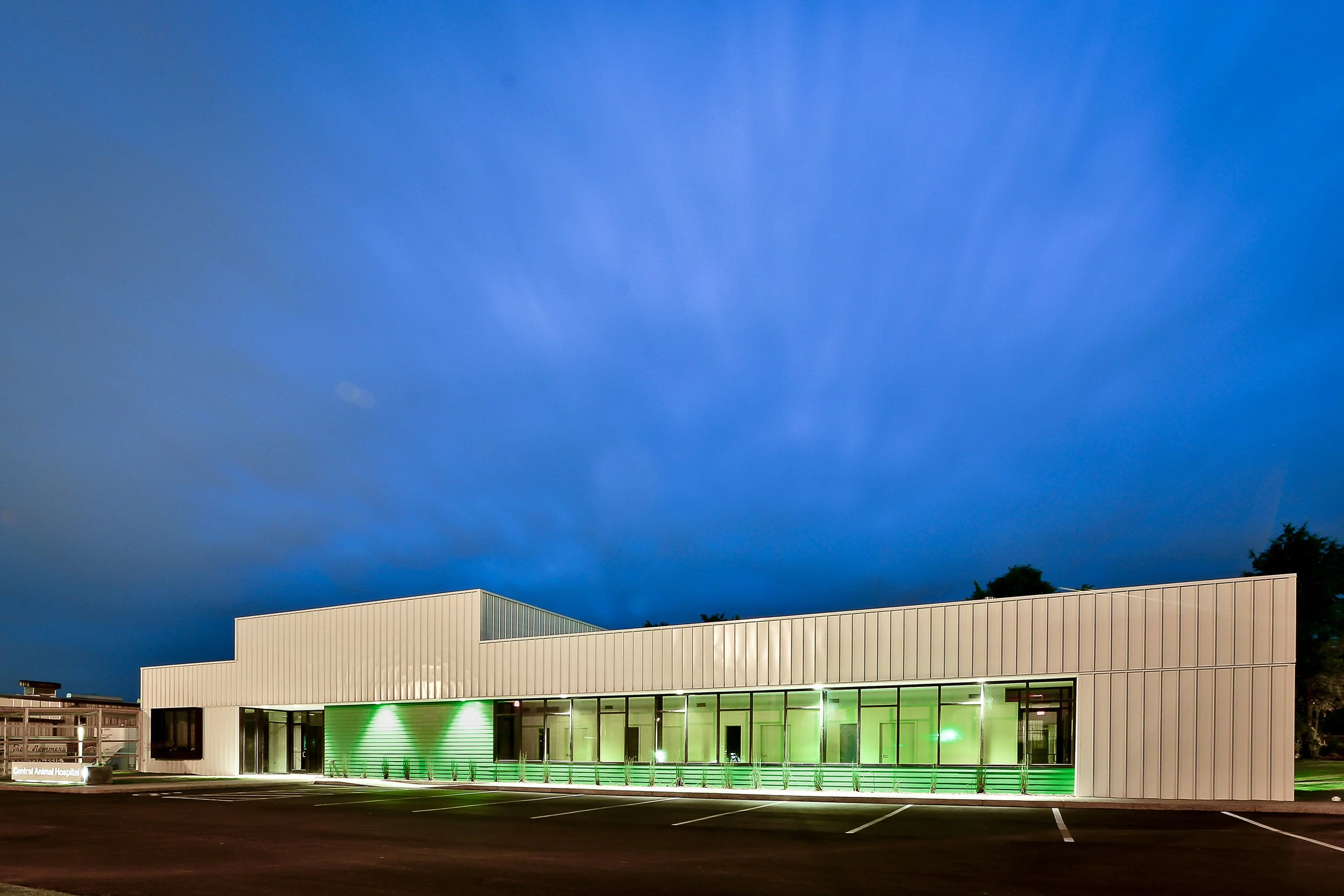
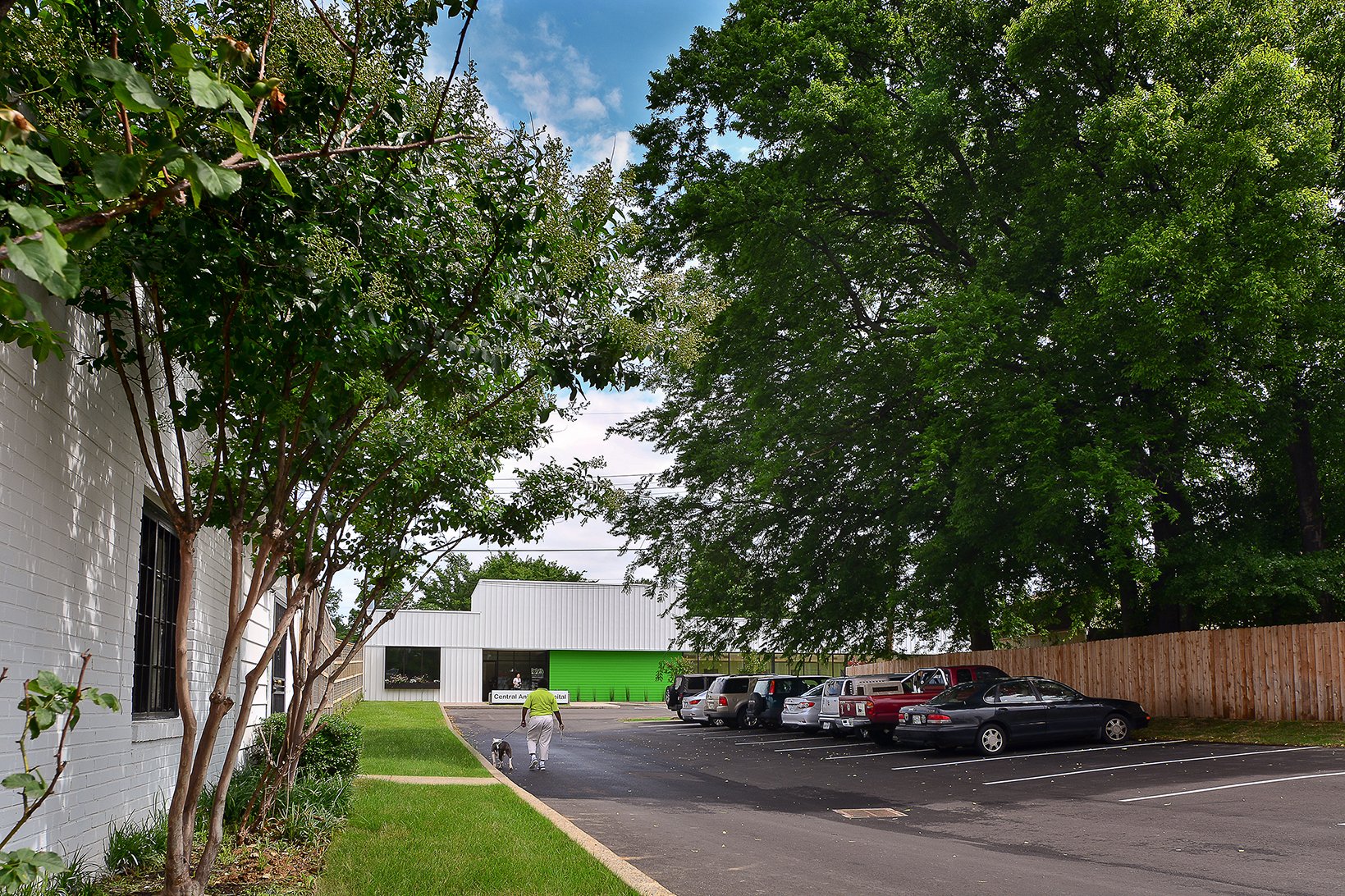
The new 4,500 square foot facility for the fifty-year-old practice connects to the clinic’s existing building via a vegetation-enclosed walkway. The existing building becomes a larger space for boarding/grooming, while the new building houses comprehensive veterinary services with the latest diagnostics, treatments, and wellness programs.
-
Central Animal Hospital had long-since outgrown its existing facility. The practice owned nearly an acre of land behind their existing property, on which it had planned to build a new facility, converting the original building into boarding and grooming only. The L-shaped site and programmatic requirements predicated the siting of the new facility: set back 200 feet from a busy street, screened from the street by local businesses. The challenge, therefore, was to give the new facility a visual presence, while providing a safe and comfortable environment for the animals.
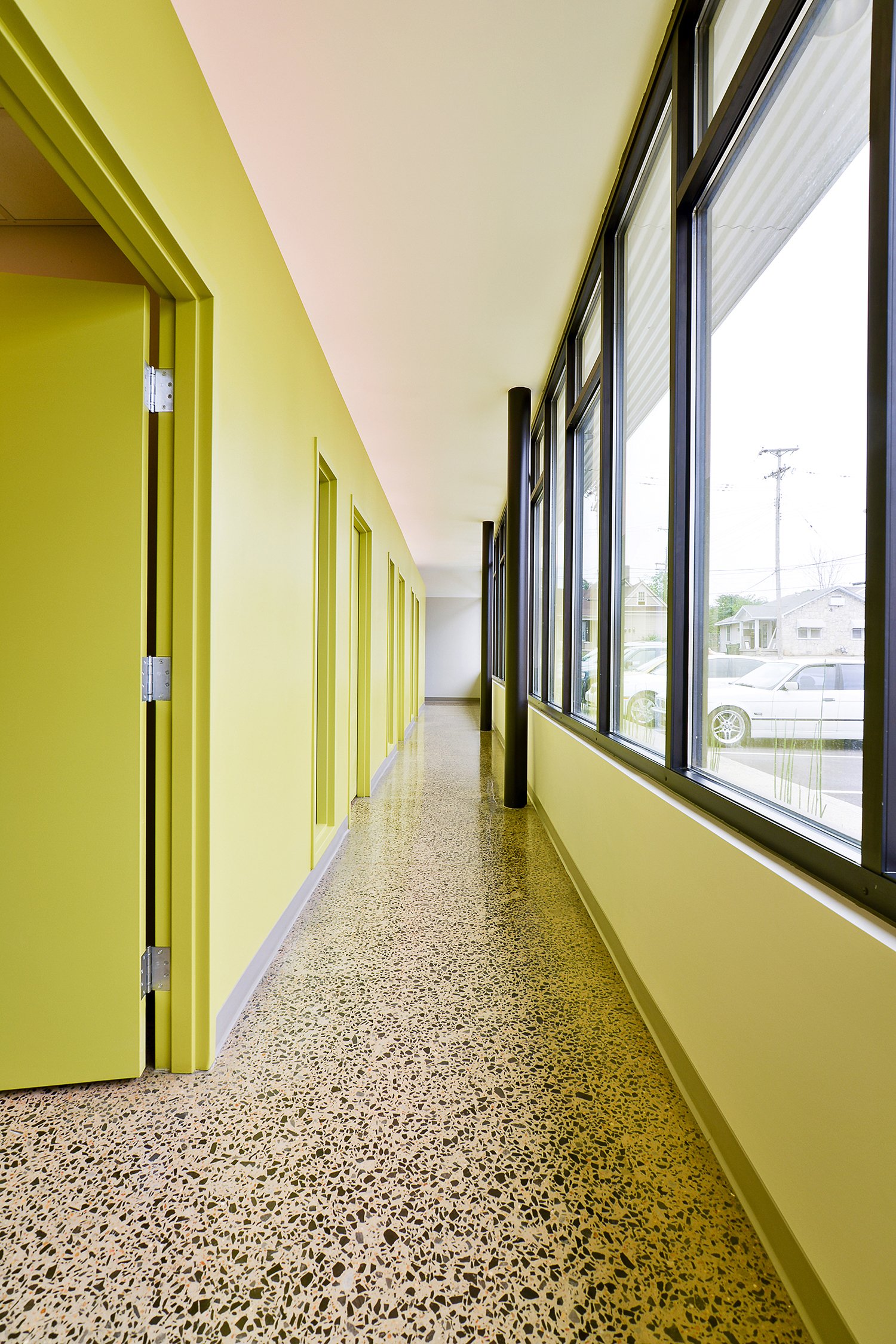
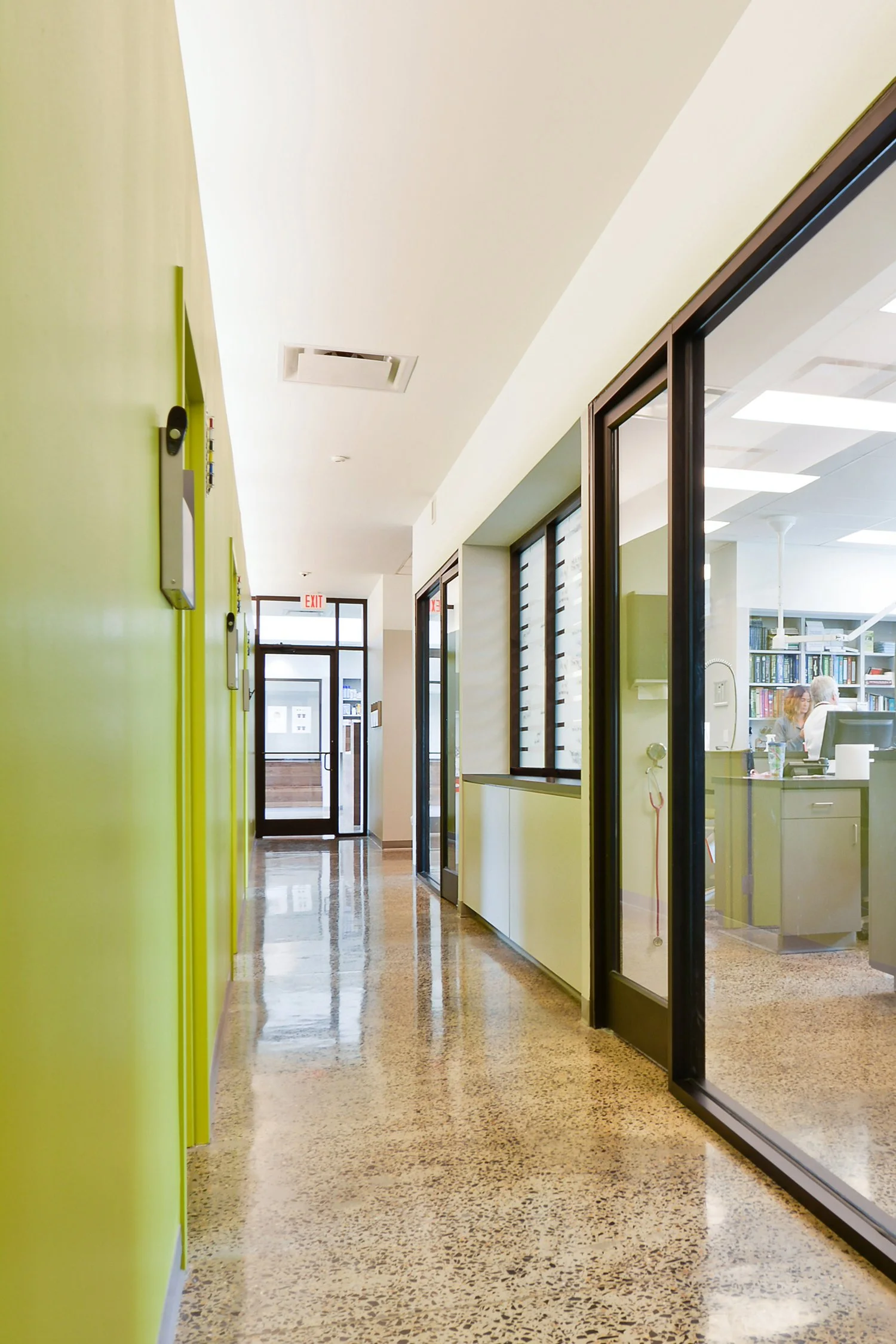
Site planning was approached as a campus: utilizing an enclosed exterior connector between the existing structure and the new hospital to link the two structures physically and visually from the street. Bright colors compliment a simple silhouette and material palette, used to embolden the street façade and draw one’s view deeper into the site. The exterior form is a direct response to site conditions: a deep overhang on the south side protects both the entry and the wall of glazing adjacent to the exam rooms. The ceiling of the reception area is lofted to incorporate a bank of clerestory glazing to fill the space with northern light. Soft light and ample views are indicative of the interiors, which are simply organized around a core of exam rooms. The core acts as a mediator between the patient zone and the doctor zone, providing a clear organization structure for patients to navigate.