-
Architecture
Interior Design
Programming
Signage Design
Wayfinding/Signage -
Adaptive Reuse
Carbon-Sequestering Materials
Enhanced Site Accessibility
Heat Island Effect Mitigation
Life Cycle Assessment (LCA) for Carbon
Light Pollution Reduction
Low Maintenance Materials
Passive Building Envelope
Permeable Surface Expansion
Rainwater Management
Reclaimed Building Materials -
Completed May 2024
-
Memphis, Tennessee
Methodist Le Bonheur Healthcare Garden Pavilion
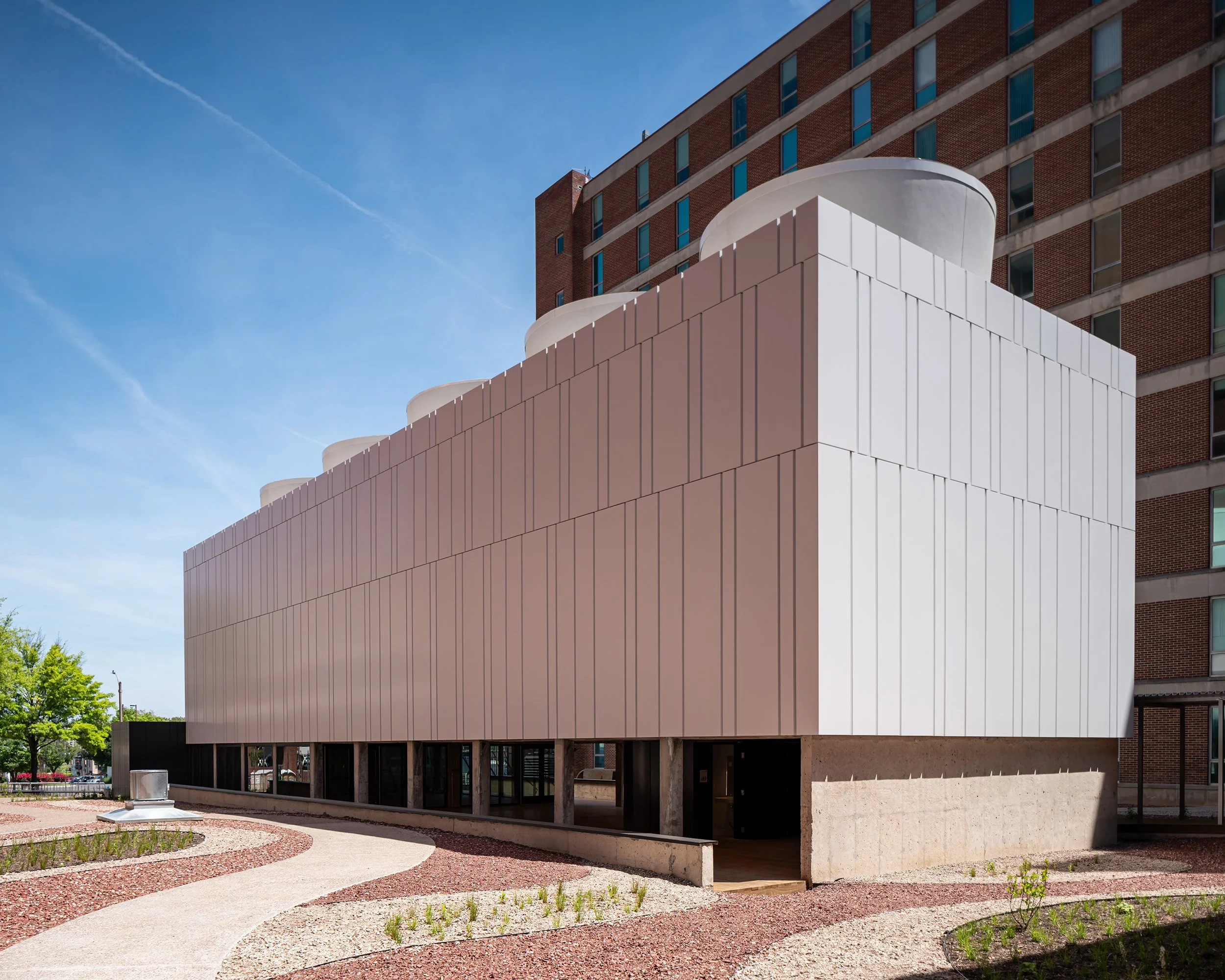
A reinvention of the hospital’s abandoned 1970s concrete cooling tower into a much-needed place for respite and gathering.
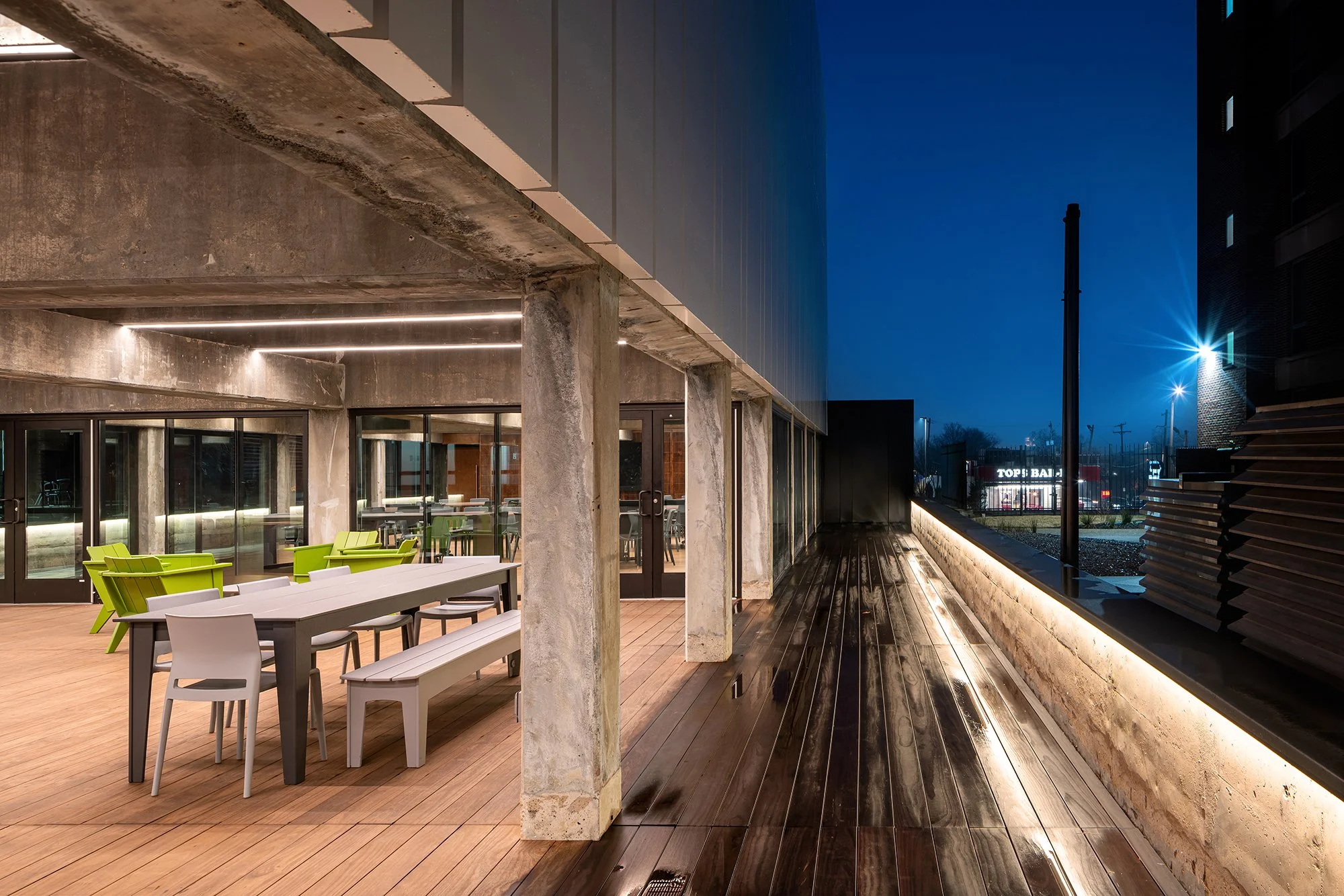
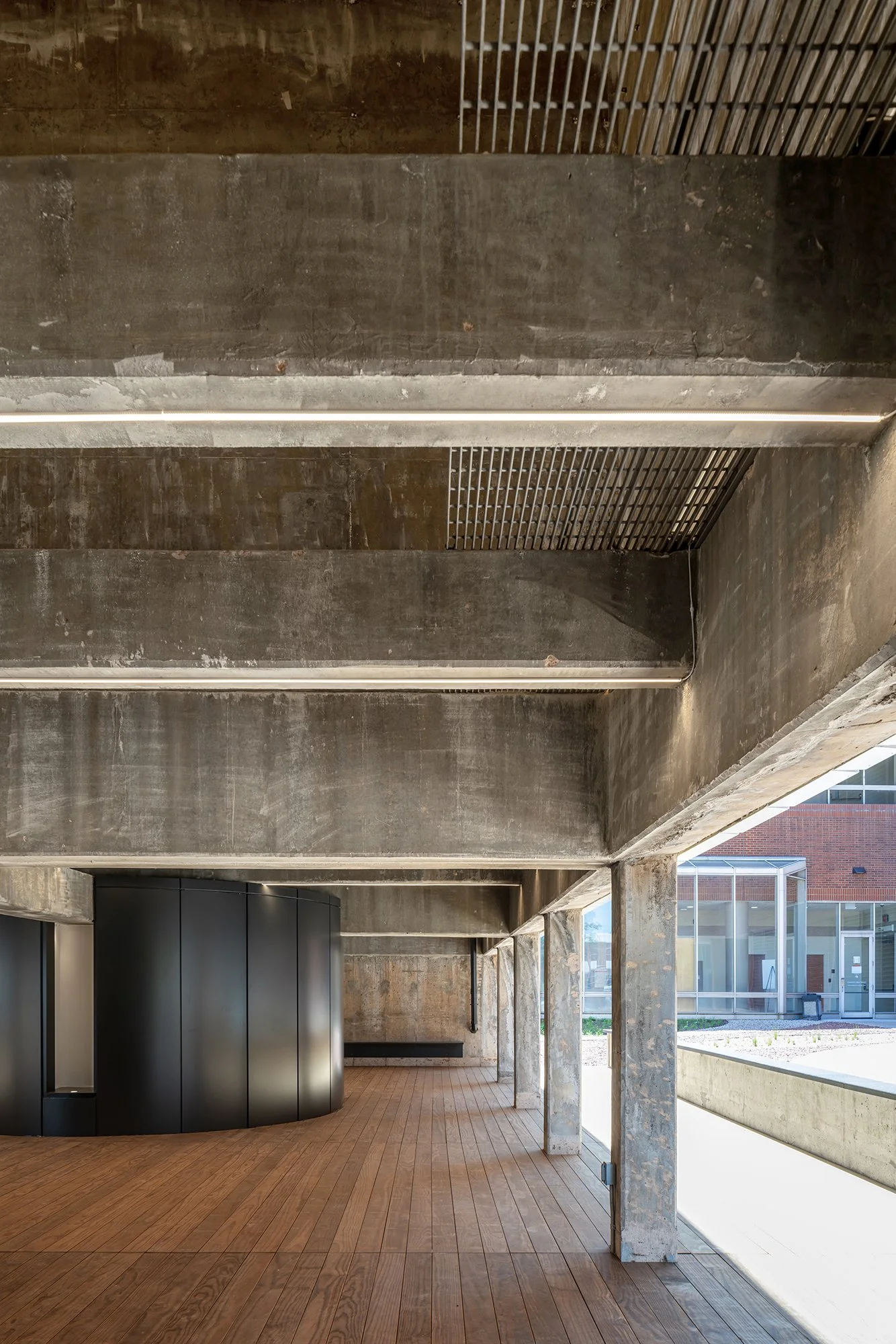
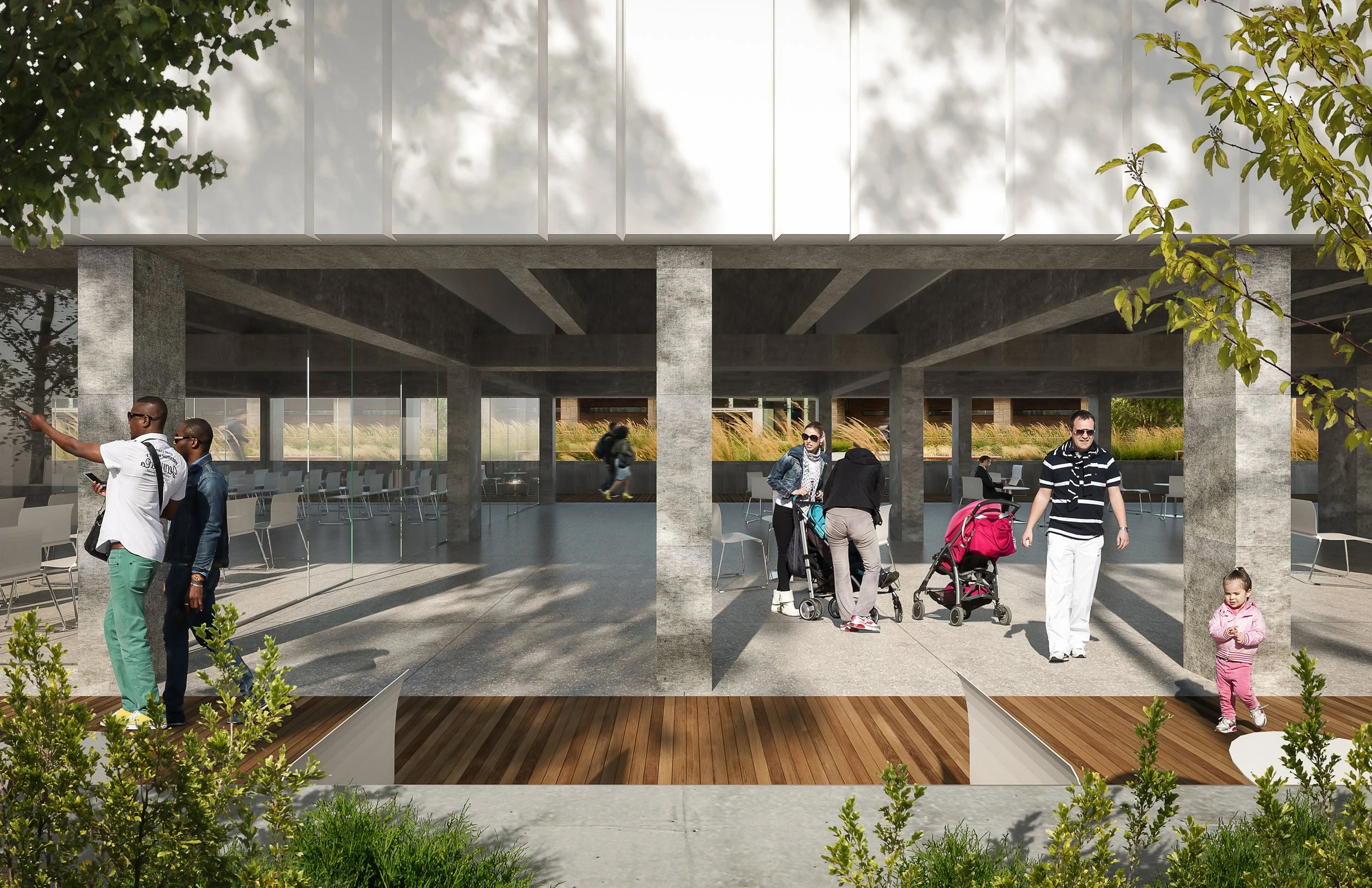
Flexible indoor and outdoor spaces offer a peaceful and open experience for staff, caregivers, and ambulatory patients year-round. What was once an aging, obsolete building on campus, is now a national model of sustainability and innovative reuse – reinventing its massive, embodied carbon footprint into a new urban garden.
-
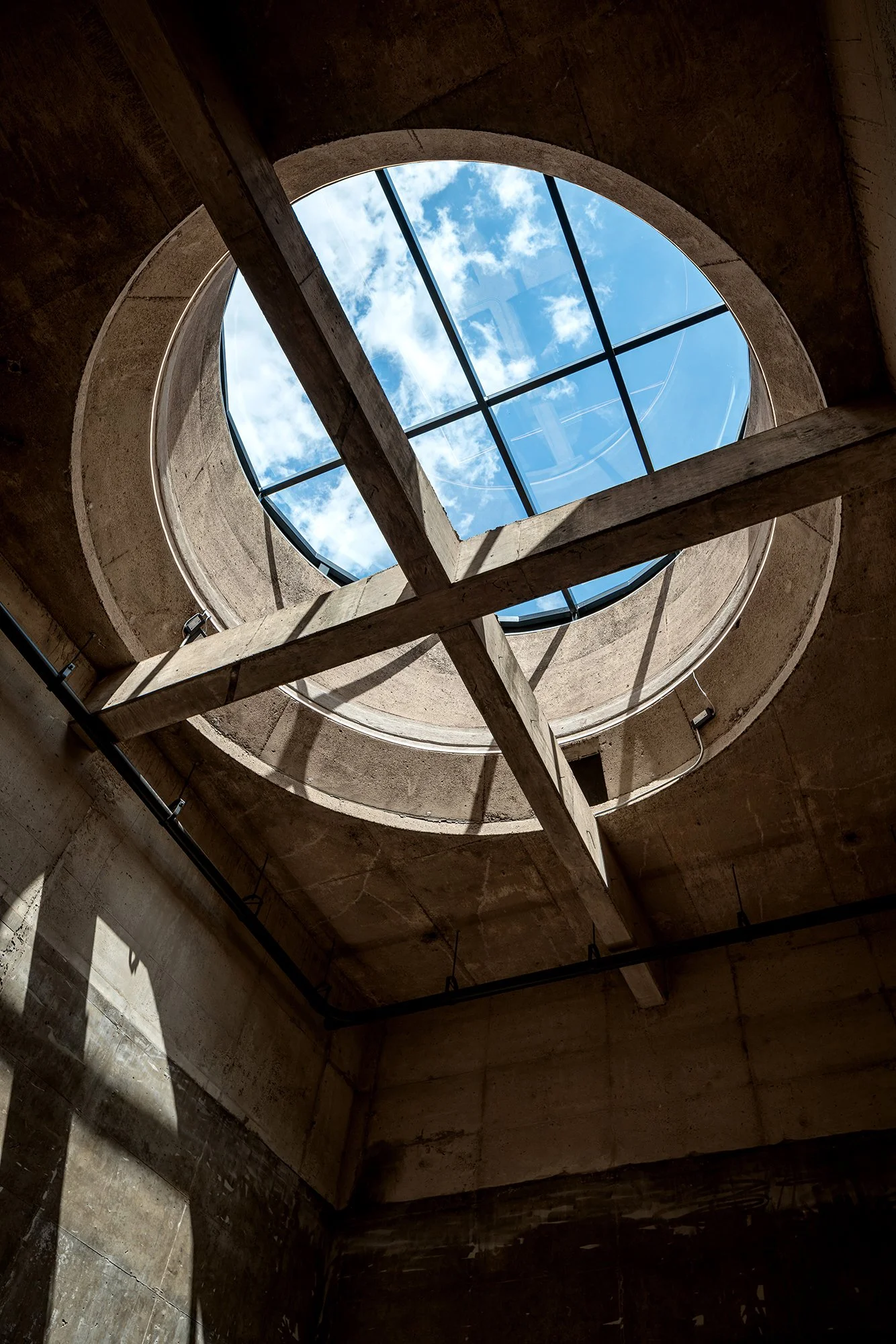
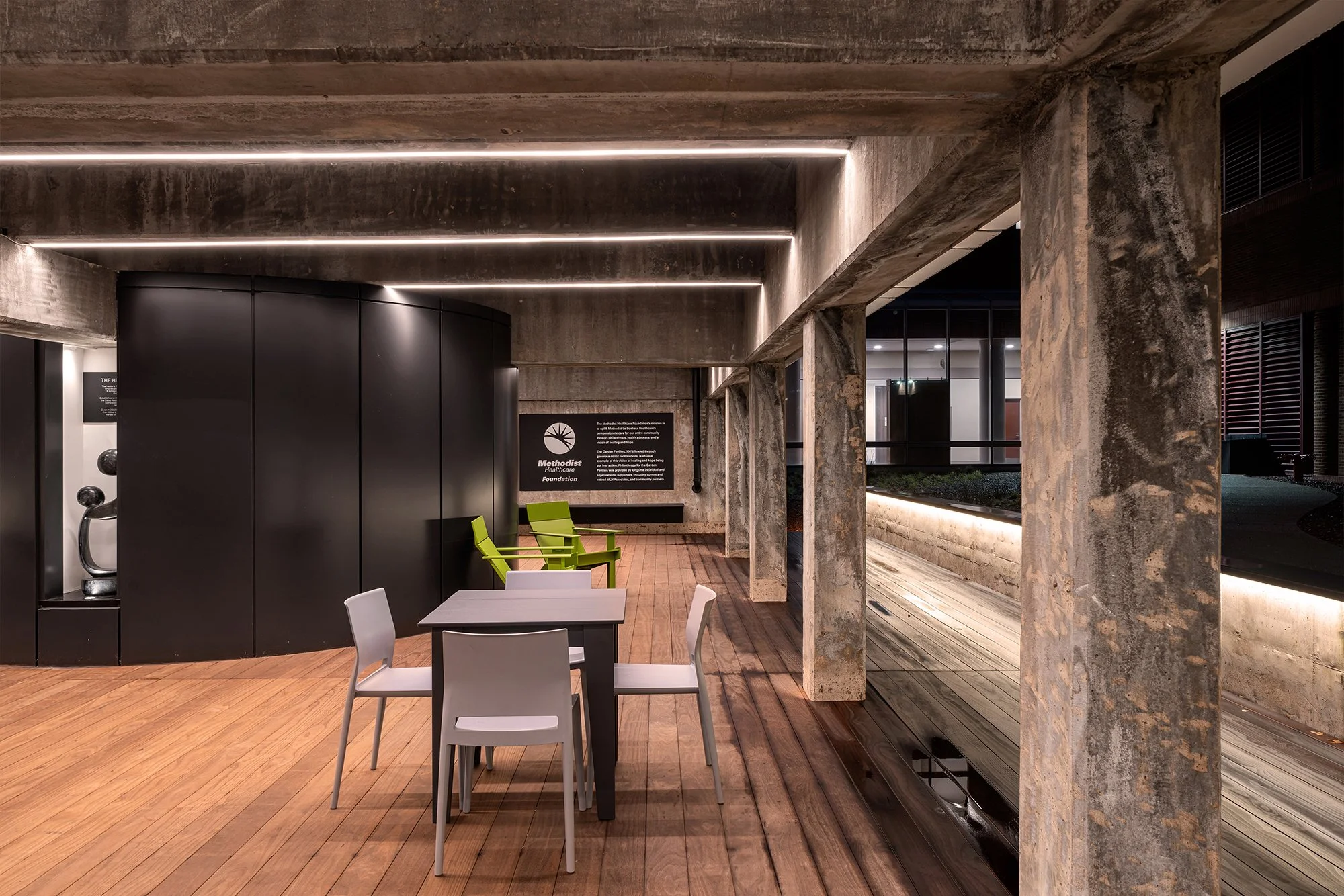
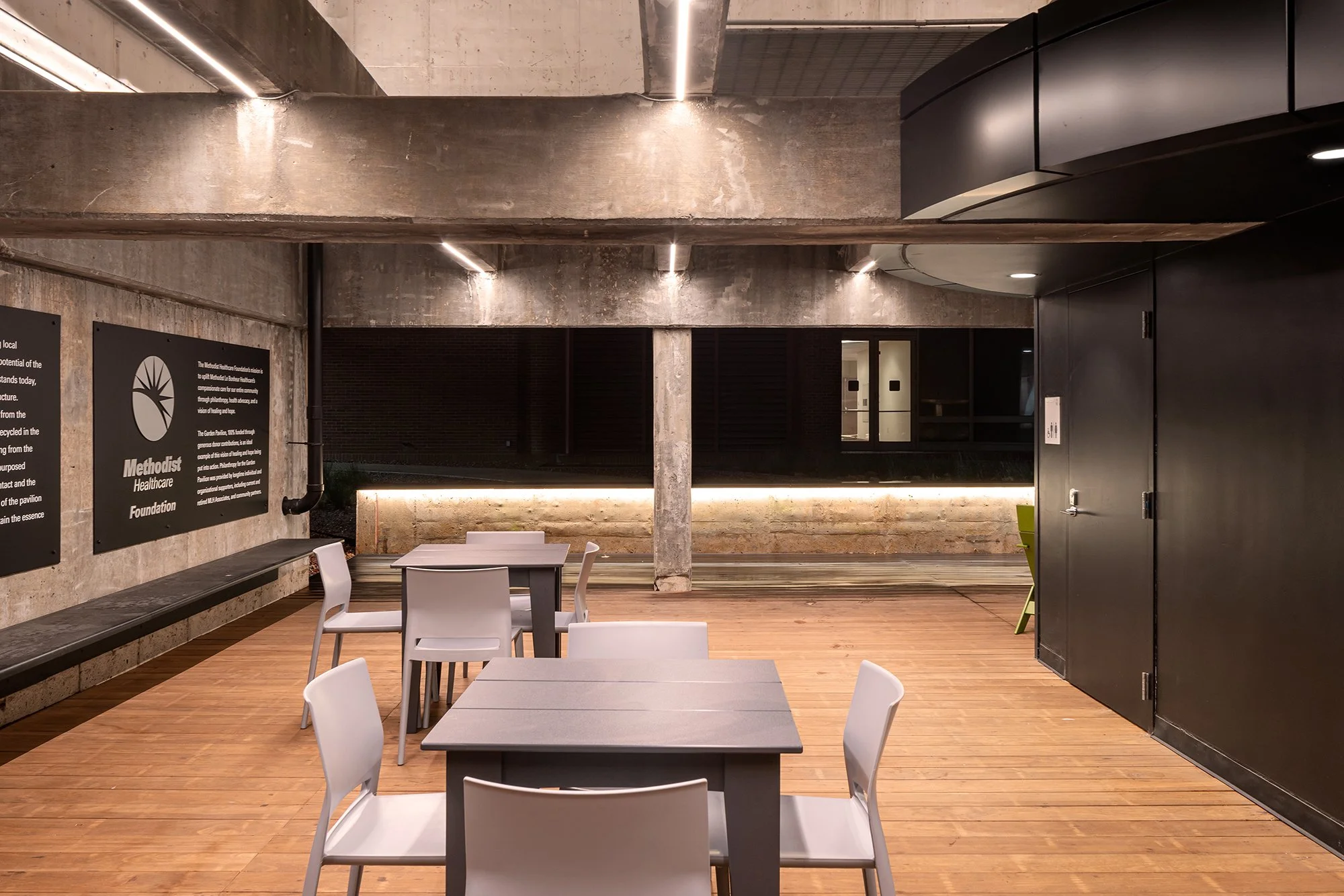
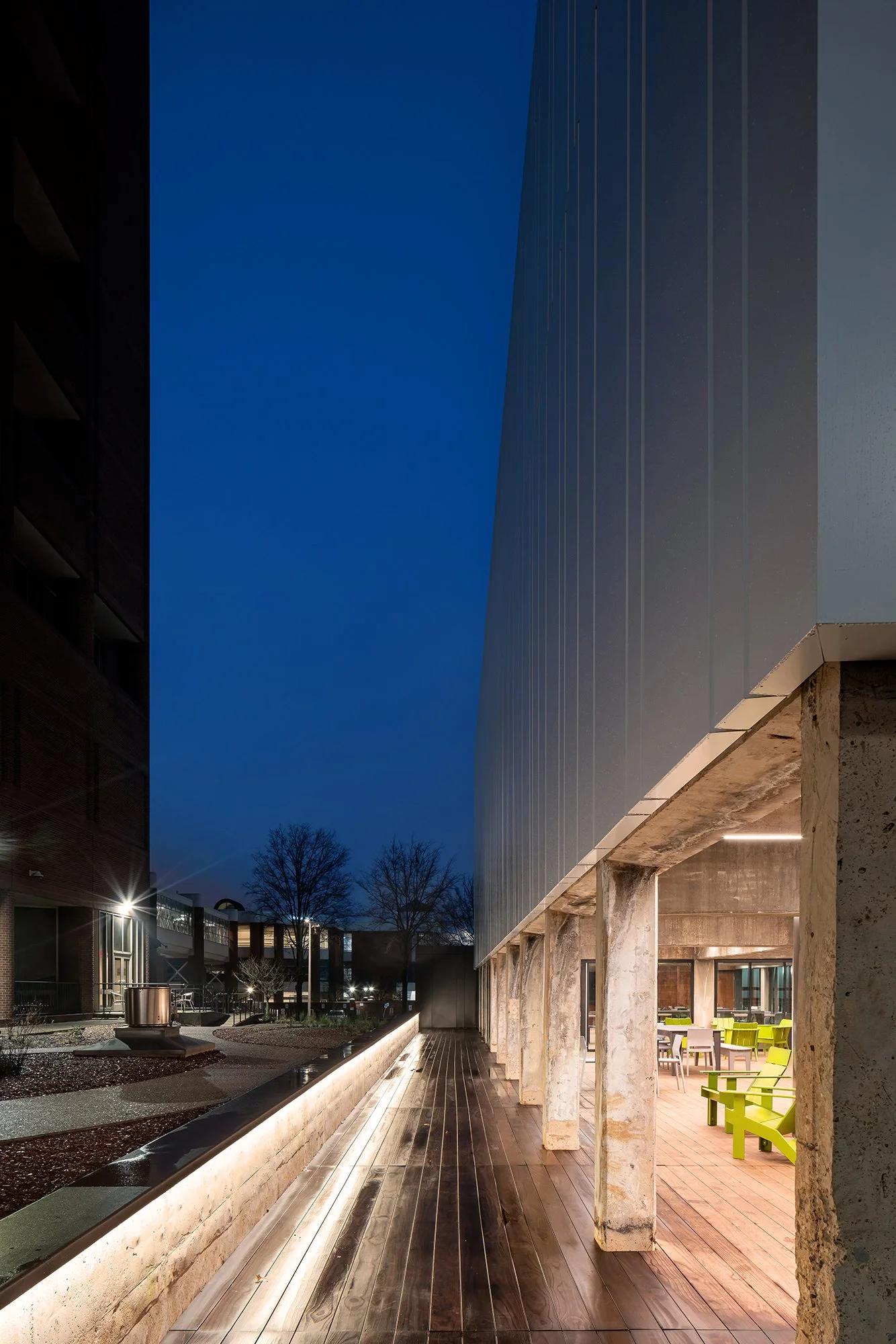
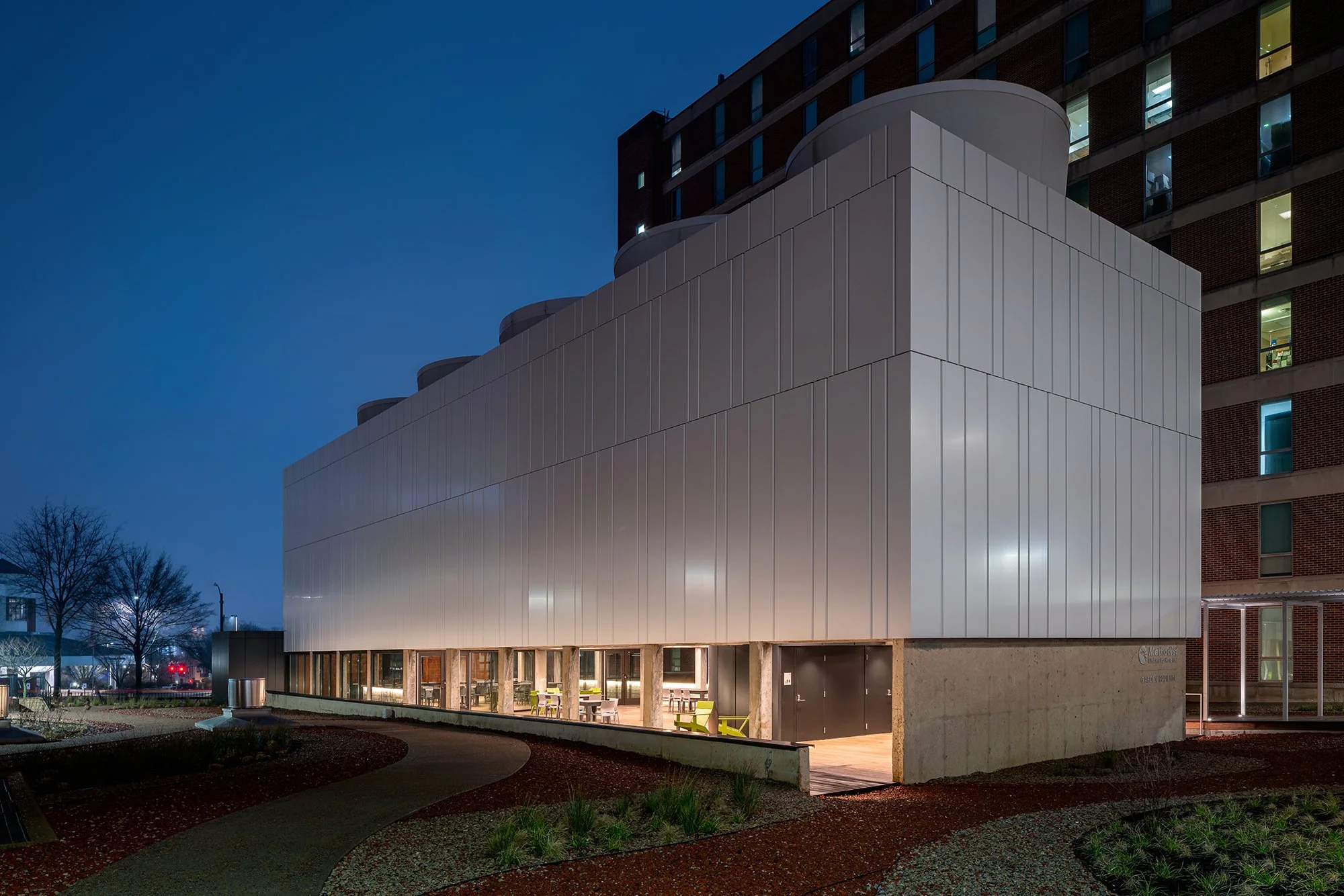
One of the nation's largest faith-based hospital systems was inserting a new hospital tower in its urban, multi-block campus. Its facilities operated continuously, yet it had no outdoor respite amenities to accommodate the thousands of associates, caregivers, and ambulatory patients moving through the campus daily, in all seasons and all weather conditions. The owner asked our team to respond to the hospital's plan to demolish an abandoned 1970s concrete cooling tower, the largest in America at the time of its construction. It had become an eyesore, surrounded by patient towers on three sides and a major urban street to the north. We suggested reinventing its massive, embodied carbon footprint into a pavilion with indoor and outdoor spaces to become a respite, eating, gathering, and collaborating place. It would be part of a new urban garden with walking surfaces and garden media of crushed clay block aggregate, tons of which were recovered from the cooling tower's core and crushed on site, revealing its cylindrical roof openings high above. The center opening gives way to a monumental skylight, providing a spiritual connection between those below and the hope of heavenly provision above.
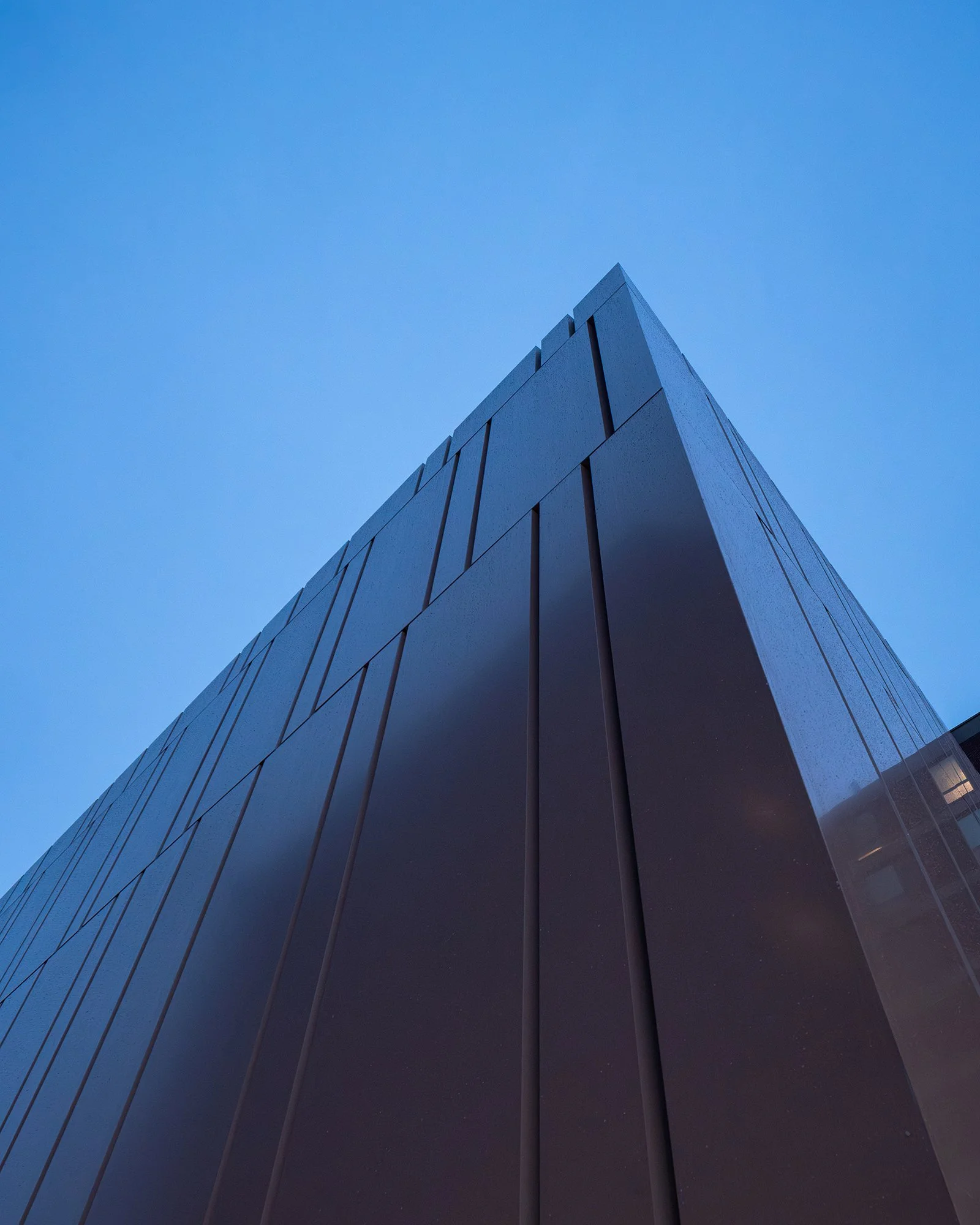
The cooling tower could become a national model of sustainability focusing on reinvigorating life into a mid-century modern piece of infrastructure to become a valuable piece of contemporary architecture to benefit the many. It was conceived in 2016, placed on pause for several years to complete fundraising, and occupied in 2024. It is pleasant, peaceful, airy, and monumental in proportion and light. Given Memphis' heat and humidity, year-round comfort was paramount to encourage maximum use. The surrounding buildings create shade for early morning and late afternoon sun. This feature, along with the immense mass of the concrete structure, actually increases the effectiveness of both passive and active systems of both indoor and outdoor spaces. The bright white aluminum upper skin contrasts with the existing sandblasted concrete walls to create a texture that enriches the natural and artificial light sources' effect on the overall experience of this found space. Its volumetric site, with vie-sheds from surrounding towers, offers visual and physical experiences to those in the towers. It feels safe and secure at all hours. The central skylight deflects rainwater to keep the elements outside. The Garden Pavilion has, in a relatively short time, become "the place" of respite and gathering for its hundreds of daily visitors.
The project re-imagines the possibilities of an eroding cooling tower, which would have required a costly and disruptive demolition process over many months. With the thoughtful exercise of "editing out" and repurposing the cooling media within, this once nationally recognized engineering achievement receives a second life as it becomes architecture. The project's social, economic, and environmental value has been most impactful. It provides a much-needed place of renewal, capitalizes on the embodied carbon captured in the original concrete structure, saves the owner millions of dollars over the cost of building new, and ultimately becomes a national precedent for valuing and repurposing our nation's aging infrastructure.